Mahoning County Property Tax Guide 2026: Reforms, Deadlines & Reappraisals
For property owners in Mahoning County, 2026 is a pivotal year. A wave of new state legislation, combined with local triennial assessment updates, has fundamentally shifted the real estate landscape from Youngstown to Canfield. This guide provides a deep dive into the 2026 reforms, tax calculation mechanics, and the legal avenues available to protect your investment.

1. The 2026 Legislative Shift: Ohio HB 186 and HB 124
The most significant news for 2026 is the implementation of two major tax reform bills passed by the Ohio General Assembly. These laws were designed to mitigate “sticker shock” caused by rapidly rising home values in the Mahoning Valley.
House Bill 186: The Owner-Occupancy Protection
HB 186 is a game-changer for residents who live in the homes they own. It expanded the state’s Tax Rollback program.
- The Mechanism: Historically, Ohio provided a 10% rollback on taxes for all real property and an additional 2.5% for owner-occupied homes. HB 186 increases these credits for 2026 to ensure that as property values rise, the effective tax rate for primary residents remains stable.
- The Catch: You must have an approved Owner-Occupancy Credit application on file with the Mahoning County Auditor to receive this benefit. If your property is listed as a rental, you will not see this relief.
House Bill 124: Localized Valuation Standards
Before 2026, state-level tax officials often used broad, statewide data to force value increases on local counties. HB 124 now mandates that the State must prioritize local sales data provided by the Mahoning County Auditor. This prevents Youngstown residents from being taxed based on growth trends happening in Columbus or Cleveland.
2. The 2026 Triennial Update: Market vs. Tax Value
Ohio law requires a revaluation of all property every three years. In Mahoning County, 2026 marks the “Triennial Update” year.
How the Triennial Update Works
Unlike the “Sexennial Reappraisal” (where appraisers physically visit every property), the Triennial Update is a statistical market analysis. The Auditor’s office analyzes every valid sale in your specific neighborhood over the last three years to determine the new “Fair Market Value.”
2026 Market Outlook: Due to the low inventory of homes in Boardman, Austintown, and Poland, experts estimate that the 2026 update will see an average property value increase of 12% to 18% across the county.
3. Mahoning County Real Estate Market Trends (April 2026)
To understand your tax bill, you must understand the local market. Below is the current snapshot of median sale prices across the county as of Q1 2026.
| Municipality | Median Sale Price (2025) | Median Sale Price (2026) | Growth Rate |
| Youngstown | $122,000 | $139,500 | +14.3% |
| Boardman | $205,000 | $228,000 | +11.2% |
| Canfield | $320,000 | $355,000 | +10.9% |
| Austintown | $175,000 | $192,000 | +9.7% |
| Struthers | $110,000 | $124,000 | +12.7% |
4. How to Calculate Your Property Tax in 2026
Property taxes in Ohio are not calculated on 100% of your home’s value. They are calculated on the Assessed Value, which is exactly 35% of the Fair Market Value.
The Millage System
Taxes are expressed in “Mills.” One mill represents $1 of tax for every $1,000 of assessed value.
Example Calculation:
- Market Value: $200,000
- Assessed Value (35%): $70,000
- Millage Rate (Example 65 mills): ($70,000 / 1,000) x 65 = $4,550 base tax.
- Credits: Subtract the 10% rollback and 2.5% owner-occupancy credit.
5. Essential Tax Exemptions and Reductions
Many owners overpay because they are unaware of available state-mandated reductions. In 2026, eligibility thresholds for these programs have been adjusted for inflation.
The Homestead Exemption
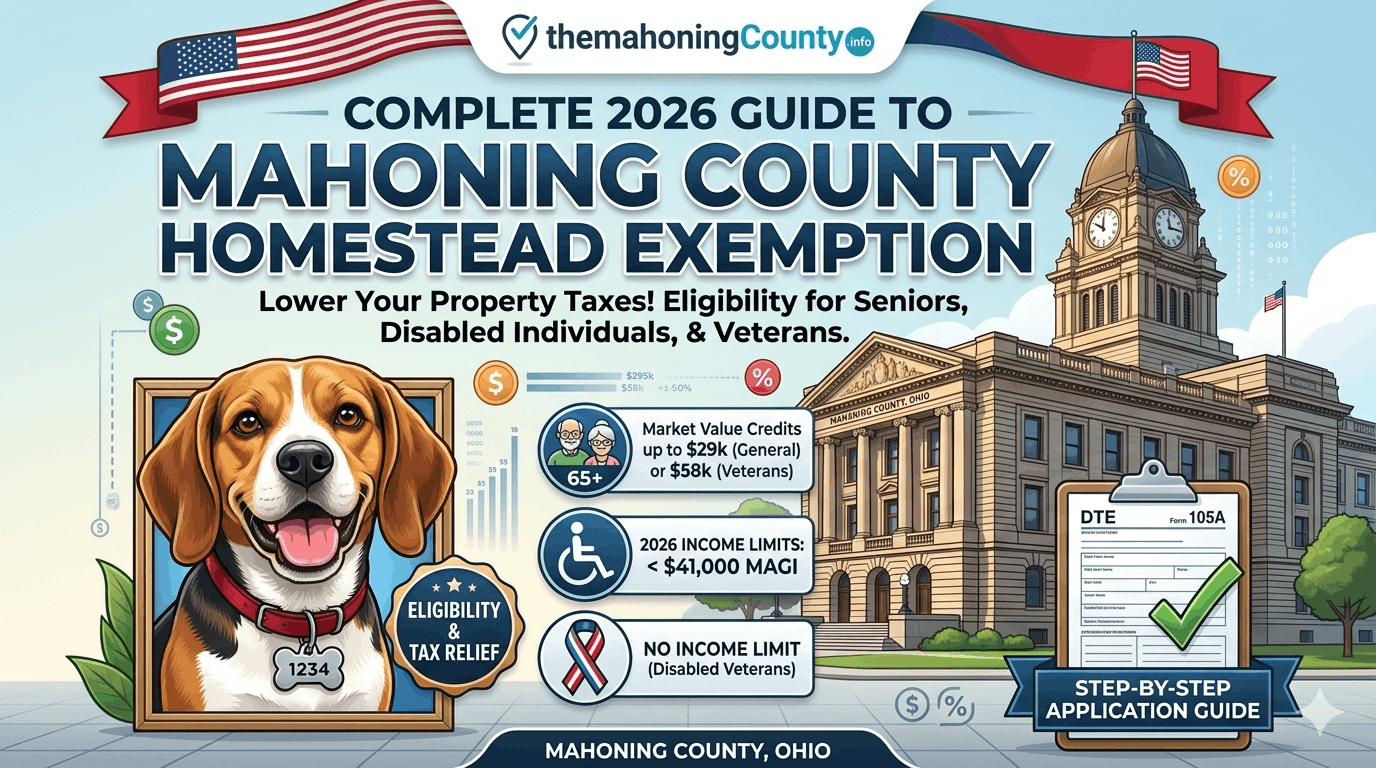
This is the most impactful program for seniors (65+) and permanently disabled individuals. It allows qualifying homeowners to shield $26,200 (or more for disabled veterans) of their home’s market value from taxation.
- New for 2026: The income threshold to qualify has been increased to reflect current economic conditions.
CAUV (Current Agricultural Use Value)
If you own 10 or more acres in rural Mahoning County used for commercial farming, you can apply for CAUV. This taxes the land based on its agricultural production capacity rather than its market value for development. This often results in a 50% to 80% reduction in land taxes.
6. Challenging Your Value: The Board of Revision (BOR)
If you believe the Auditor’s 2026 Triennial Update has overvalued your property, you have a legal right to appeal. This process is handled by the Mahoning County Board of Revision.
Review the Tentative Value
September – December 2026
The Auditor publishes tentative new values late in the year. Check the online portal to see your proposed increase before it becomes official.
File Form DTE 1
Jan 1 – March 31, 2027
This is the official complaint form. You must file it during the first quarter of the year following the update.
Present Evidence
The Hearing Phase
A simple “my taxes are too high” argument will fail. You must provide a recent appraisal, photos of property damage, or a closing statement if you recently bought the home for less than the tax value.
7. Protecting Your Title: The 2026 Fraud Alert System
With the rise of “Deed Fraud,” the Mahoning County Recorder’s office has upgraded its security infrastructure. Criminals occasionally attempt to record fraudulent quitclaim deeds to “steal” home equity for illegal loans.
The Solution: Enroll in the Property Fraud Alert system.
- It is a free service.
- You register your name and parcel number.
- If any document is recorded against your property, you receive a real-time notification via email or phone.
8. Important Deadlines for the 2026 Tax Year
Mark your calendars. In Ohio, we pay taxes “in arrears,” meaning your 2026 tax obligation is paid in 2027.
- First Half Payment Due: Typically March 6, 2026 (for the 2025 tax year).
- Second Half Payment Due: Typically August 7, 2026.
- CAUV Renewal Deadline: First Monday in March.
- Homestead Application Deadline: December 31st of the year for which you are applying.
Conclusion
Navigating property taxes in Mahoning County requires a proactive approach. Between the HB 186 reforms and the 2026 Triennial Update, the numbers on your tax bill are moving. By verifying your exemptions, monitoring your neighborhood sales data, and utilizing fraud protection tools, you can ensure you aren’t paying more than your fair share.
FAQs
Why did my tax bill increase when my school levy failed?
Even if new levies fail, your bill can rise due to the Triennial Update (market value increase) or if the State of Ohio reduces its share of the local tax rollback.
Can I pay my Mahoning County taxes online?
Yes. The Mahoning County Treasurer’s office accepts E-checks and credit cards online. Note that credit card payments usually incur a 2.5% processing fee.
What happens if I miss the March 31st appeal deadline?
Legally, the Board of Revision cannot hear your case until the following year. There are almost no exceptions to this statutory deadline.